
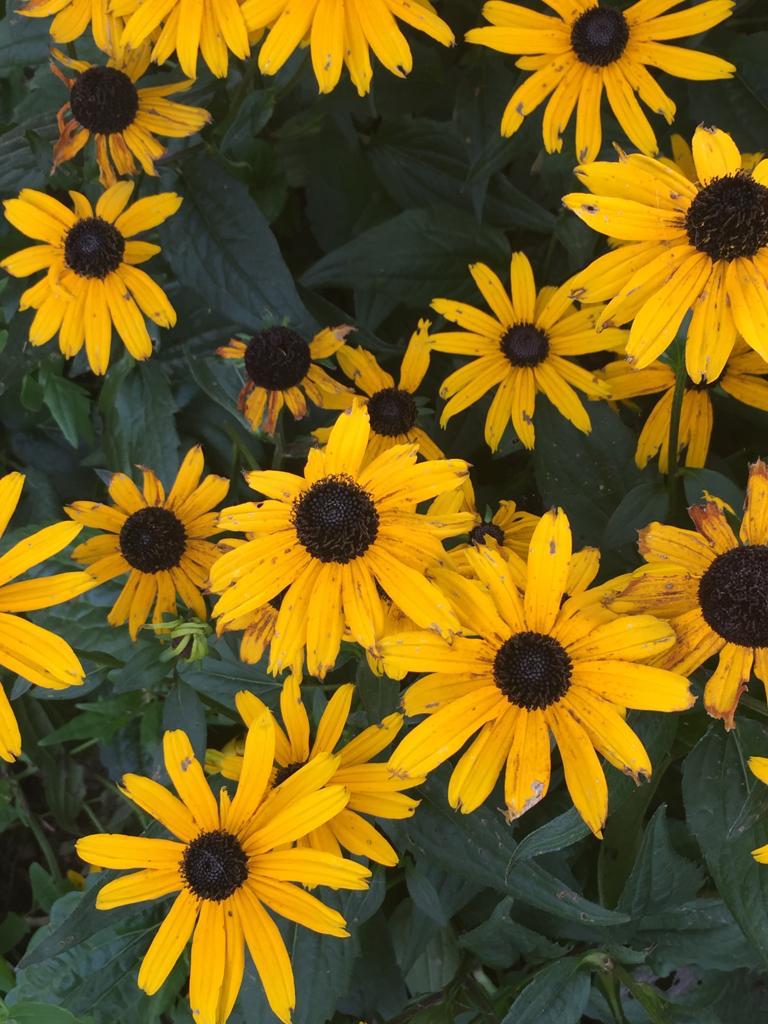
Even common, garden-variety black-eyed susans can yield a handsome ink. Image: Cathy Dillon
Bringing the colours of nature into her work, artist and journalist Cathy Dillon is harvesting local plants to create her own pigments and ink
THE EXISTENCE OF COLOUR is one of the great gifts of the physical universe, and the ability to see and appreciate it is one of its greatest gifts to us. While we can’t detect the full spectrum, the rainbow of hues visible to us represents one of the greatest pleasures and comforts of daily life.
And so on to Dublin, where journalist (and former Irish Times colleague) Cathy Dillon has been going beyond the black and white of newsprint. No longer just writing, she’s exploring a love from her past – visual arts. To do this, she is quite literally going back to the roots of writing and pictorial communication by foraging for and processing plants to to make her own pigments and ink.
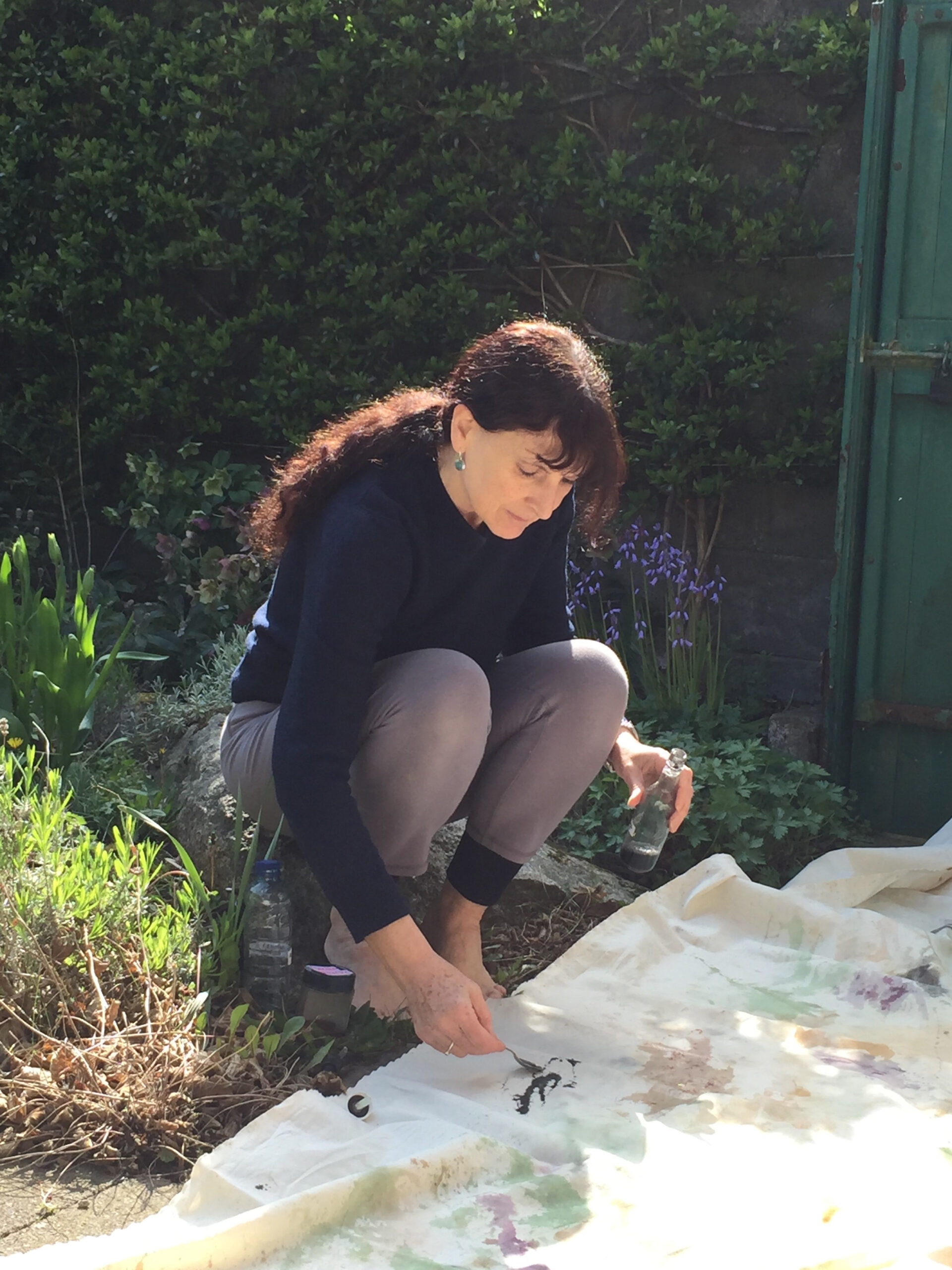
Cathy Dillon at work in her garden
Cathy, who’s always dabbled with drawing and painting, faced into a journalism career path when she decided to study English instead of visual arts. After 17 years at the Irish Times, she decided to go back to freelance work, and has augmented her writing and editing activity with drawing and painting. Making inks is a way of getting back to the foundation of written communication. “It’s the intersection of visual arts and text,” she says. “Letters are beautiful and intriguing.”
She started her exploration into natural pigment production when she embarked on a joint work with another local artist, Áine Teahan. For the Hinterland project, she got the idea to make wild inks with flora from the area. “I started to readbooks about wild inks, and there’s an active network of people who make them,” Cathy says. “I go foraging in the area and experiment with different things.”
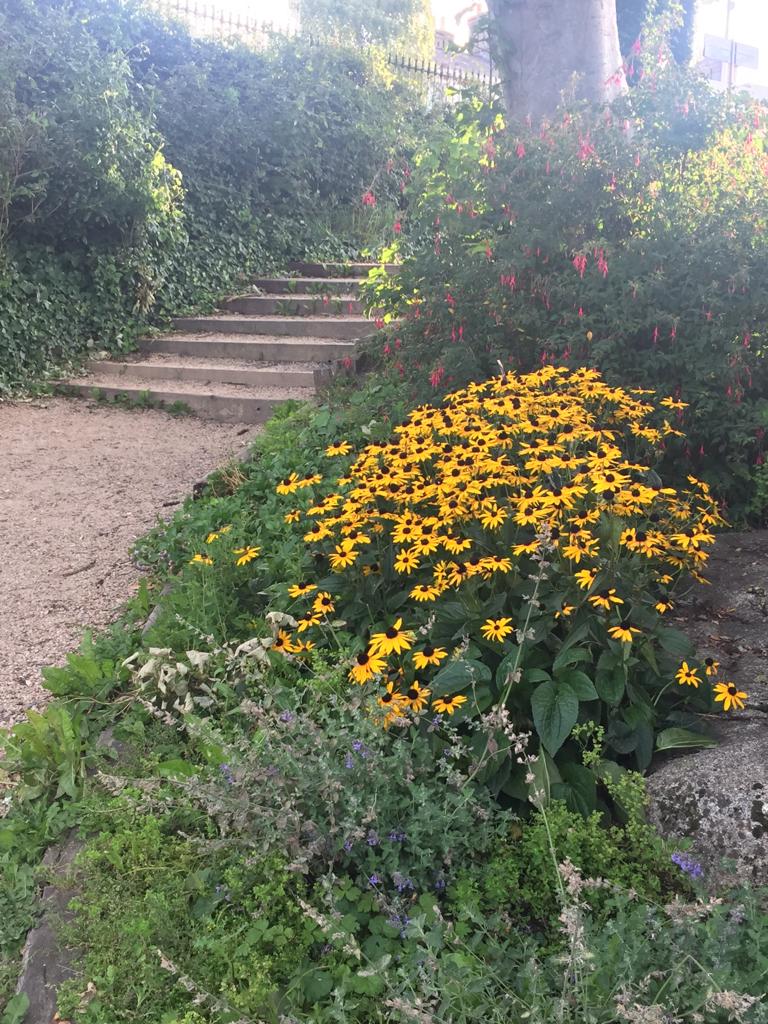
Many plants along your usual pathways could be an accessible source of rich pigment. Image: Cathy Dillon
In that field you’ve just walked through, or that park you’ve crossed on the way to the supermarket, or even just a bit of neglected green, you might have seen some of the vegetation that, properly treated, can yield beautiful pigments for writing, drawing and painting. Naturally growing items such as rose hips, blackberries, fennel, eucalyptus, birch bark and nettles can all be transformed into something into which to dip your brush and bring colour to the page. Most recently, she harvested your fairly standard black-eyed susans, happily growing in profusion along a path near Dún Laoghaire. She says that she always takes care to follow the general rules for foraging: only gather what is abundant. Take only as much as you need. And always ask permission if the plants are on private or publicly owned land.
After harvesting, she says, “You need a couple of hours to make ink, and a couple of days for pigment.” She beings by collecting her source material, pouring boiling water over it and steeping it overnight. The next day, she boils the infusion and lets it steep again. After this, she adds soda ash so that the pigment settles out. The liquid is poured into a coffee filter, which catches the pigment. It takes time, but in the case of the black-eyed susans, for example, “It turns out they make cool patterns as they dry.”
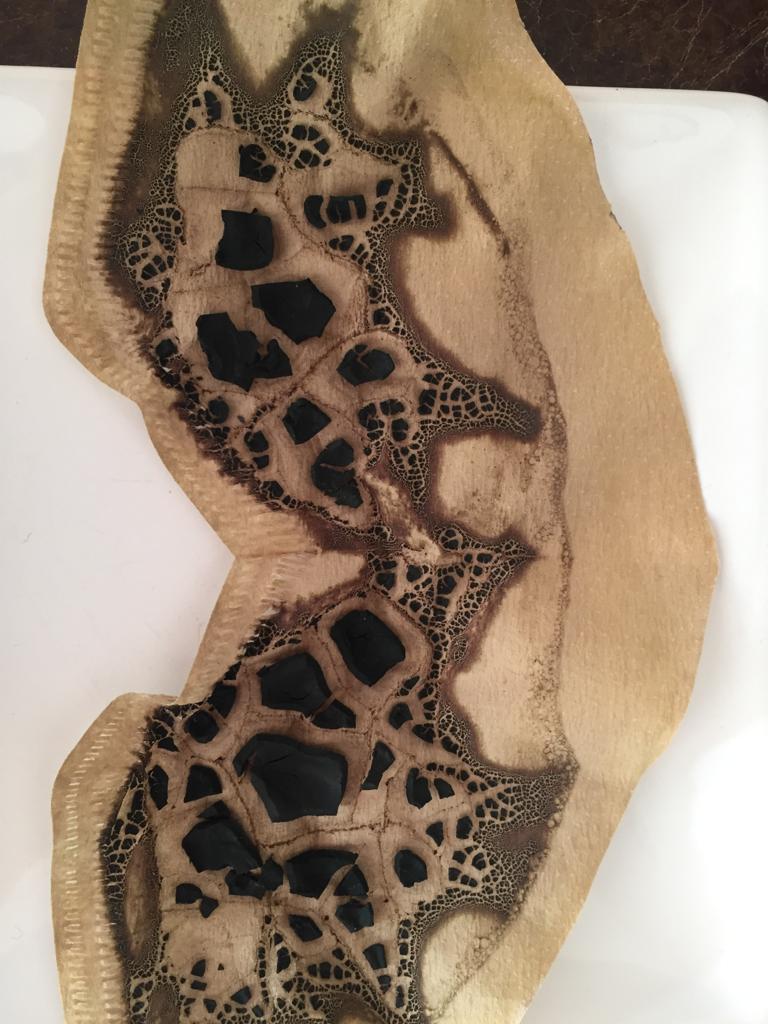
After filtering the liquid from processed black-eyed susan plants, the pigments leave intriguing patterns in the filter. Image: Cathy Dillon
Once you have dried and ground the pigment, you can make your own paints. Mixed with gum arabic (which itself is derived from the acacia tree), water and glycerin, the pigment becomes water colours. But you can swap the glycerin for oil for oil paint, or egg for tempera.
“The three main traditional dye plants are woad, madder and weld,” Cathy explains. These have been used for centuries to create blue, red and yellow pigment. She found woad seeds in an arts supply shop while visiting friends in France, brought them back and scattered them into her garden. “Amazingly,” she says, “they survived, so I’ve made pigment out of that.” She’s also in the process of growing madder. But weld has proven difficult to cultivate. “It grows wild in scrubland and neglected areas,” she says, “and likes poor soil and open conditions”, so the average cottage garden is probably not its favourite home.
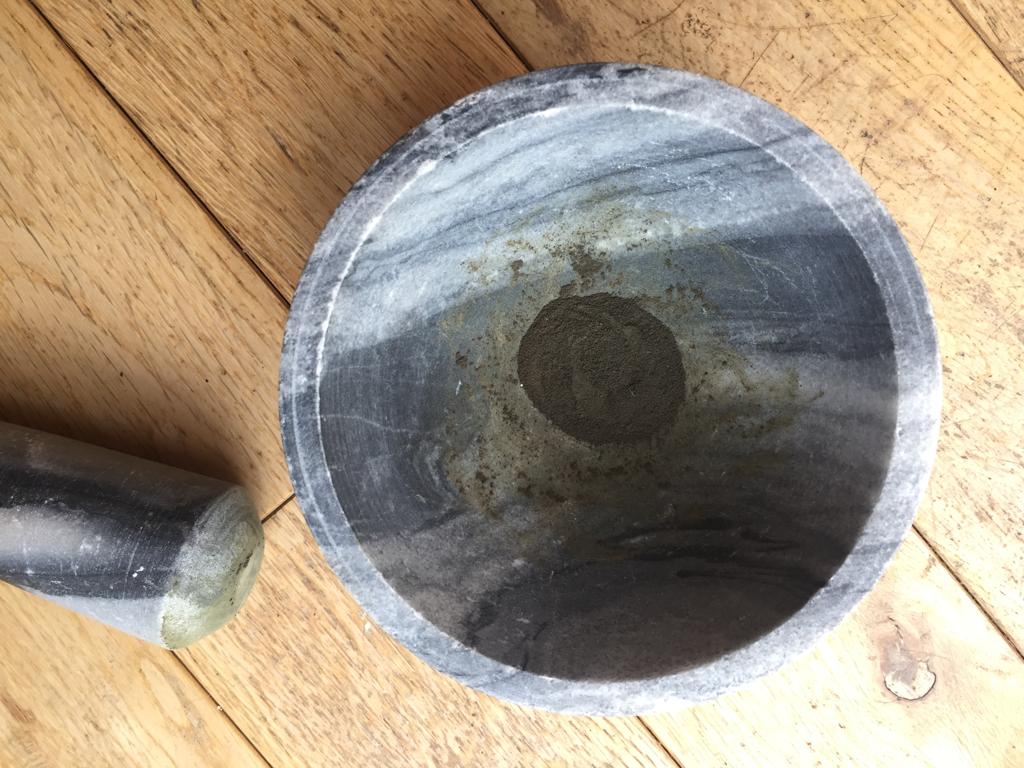
Once dried, the pigment can be powdered for making inks, paints and dyes. Image: Cathy Dillon
“I really like working with nature,” says Cathy, as she describes the advantages of foraging for her own pigments. “It’s environmental: the pigments are non-toxic and you can compost the remains of the plants. Even the chemicals you need to add are not toxic and can be poured down the drain.” And it’s relatively cheap and easy. “You don’t need a complicated infrastructure, and you can make inks out of things you see every day.”
One of the unpredictable things about natural inks is their fugitive nature. They tend to fade more quickly than industrially processed pigments, with different plants having varying staying power. Ink from blackberries, for example, “is vibrant purple, but it fades to a lighter, greyish colour. You just have to accept that.” A natural fixative can help remedy that, as can protective glass for framed works.
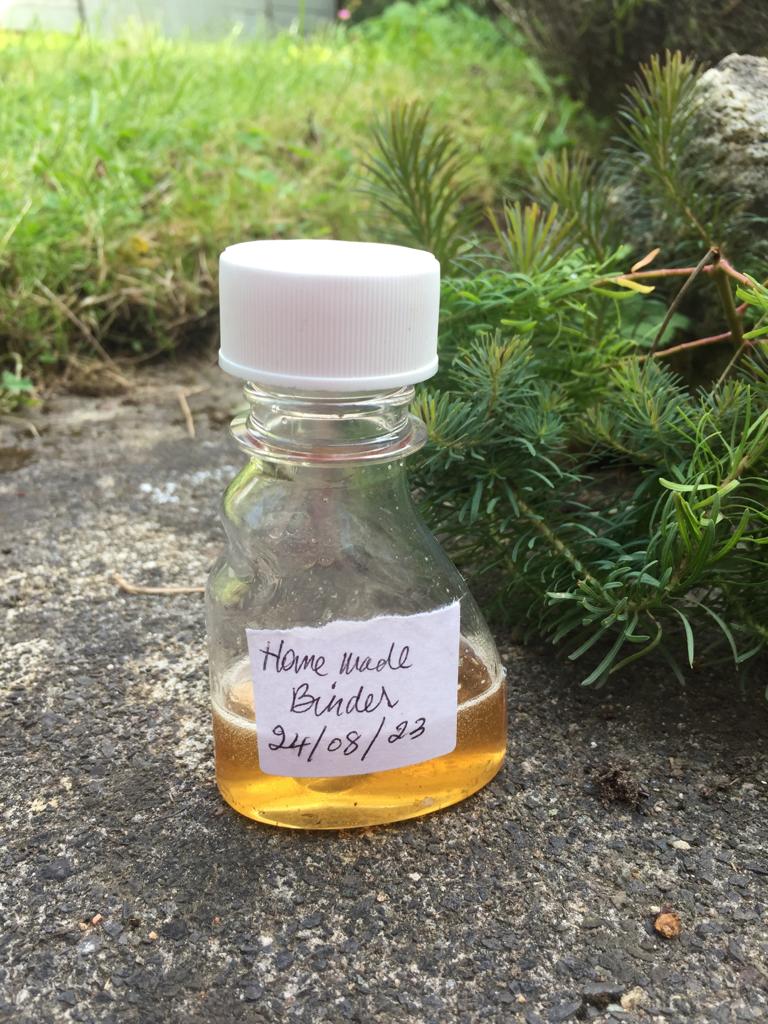
Adding gum arabic to the pigment powder is the next step to making paint. Image: Cathy Dillon
The three traditional pigment plants – woad, madder and weld – became widely used because of their intense and long-lasting colour. But apart from the weld being difficult to grow, the madder takes three to five years of cultivation before you can get that really strong crimson from it. “I did try harvesting some a bit early,” Cathy admits, and although that ruby red didn’t emerge, “I did get a rich orange.” Her best success with these thus far has been the woad, which after one year yielded a vivid blue pigment.
“If you look at tapestries from the Middle Ages, they have this bluish tint,” she says. To get green, the yarn “would have been dyed first with woad, then over-dyed with weld. But the weld fades more quickly than woad, so eventually they go to blue.”
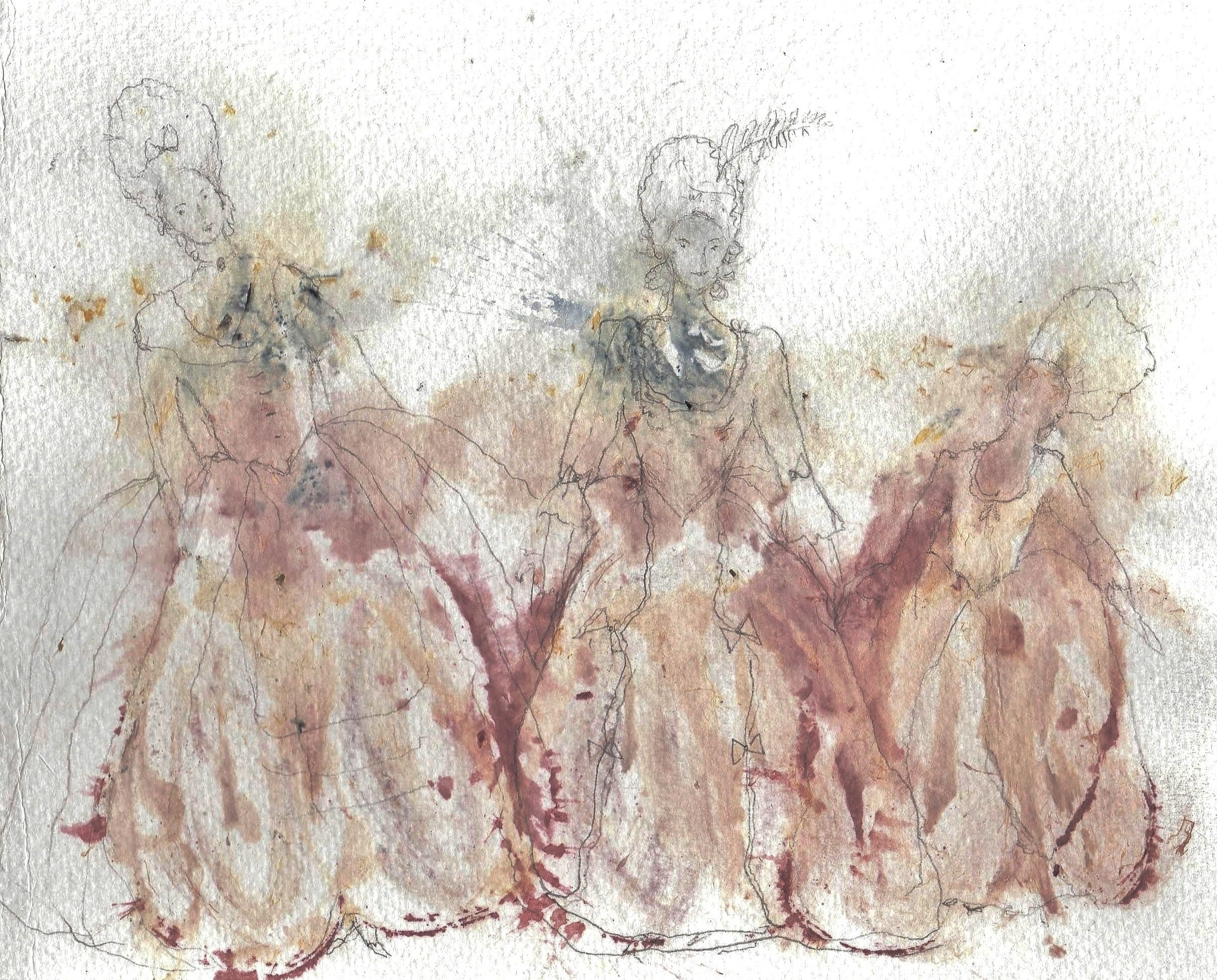
‘Coming towards the end (1)’, by Cathy Dillon, painted with natural inks and pigments
The mercurial nature of the natural pigments can present a challenge, but the excitement of watching what develops brings huge rewards. One thing Cathy has noticed is that, unlike purchased pigments, inks and paints, the natural colours all go well with one another. “The colours are more subtle, and you can get great variety by changing the pH” during processing.
She finds all steps of the process immensely satisfying. The unpredictable conditions of making and working with natural pigments “makes you realise how little control you really have,” she says. She recounts that she was growing some plants for pigments, and then “the snails got at it”.
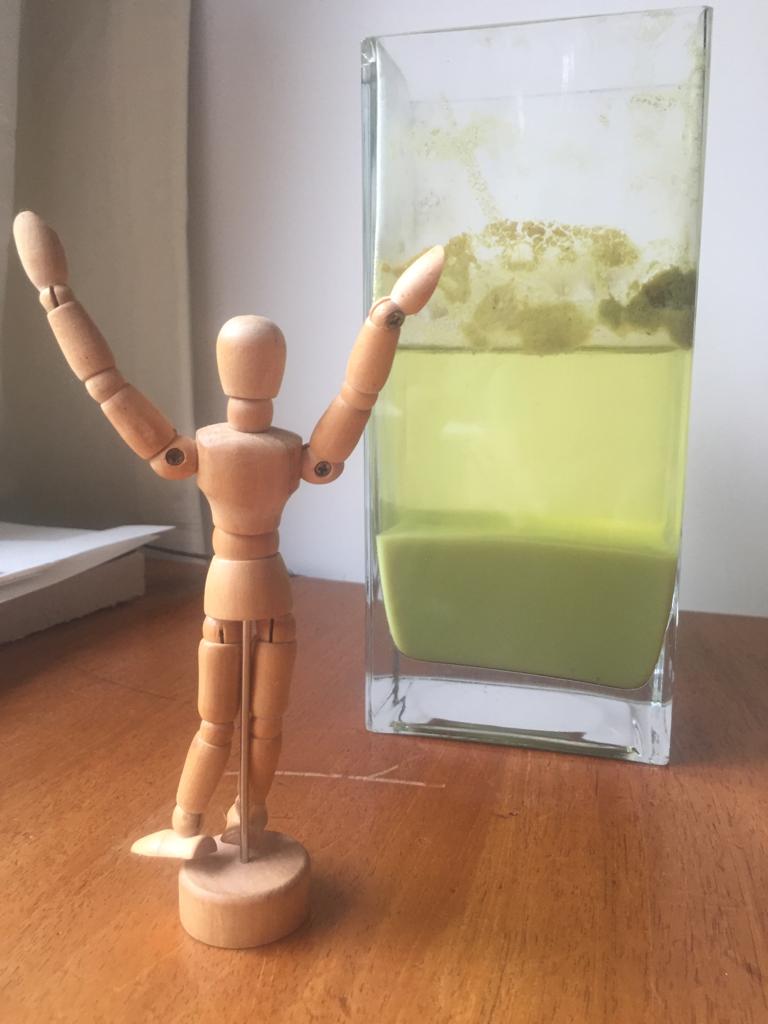
The end is the beginning of this happy process: fennel yields a vibrant green pigment. Here, the pigment is in the process of settling out of the treated liquid. Image: Cathy Dillon
But it’s the act of working with these chance, unbiddable elements that gives pigment-making its added buzz. You discover that you’re less important, “that they take the lead”, she says. “You never know what you’re going to get. It’s great when it becomes something beautiful.”
If you’d like to see more of Cathy Dillon’s work, she has a photographic piece, ‘Lights of Home’ in Artist Network’s Transience exhibition at the Walter’s gallery in Dún Laoghaire, Exhibition continues until the end of October 2023
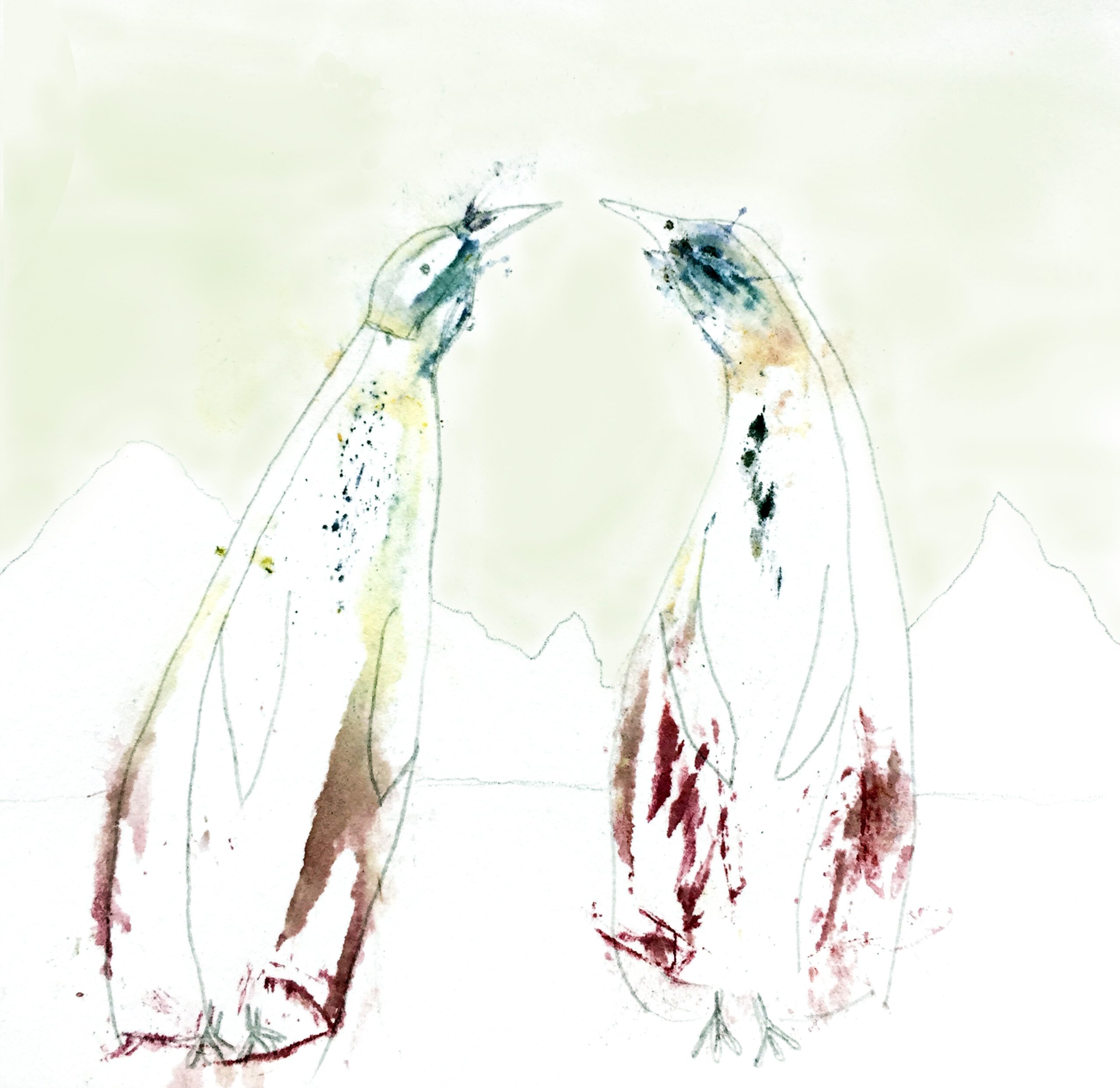
‘77% down (2)’, by Cathy Dillon, created with her own natural inks and paints